
Understanding Modern Garment Printing Technologies
Choosing from the DTF vs DTG printing technologies affects your business directly. Both are custom apparel processes but are very different in terms of how versatile, expensive and easy to use they are. Knowing these distinctions allows you to purchase the right machinery from the beginning. The best DTF printer has benefits that make it the best option for the majority of enterprises particularly when you consider long-term expansion and profitability.
What is DTF (Direct to Film) Printing?
DTF transfers the design from a special film onto fabric by means of heat and pressure. The process prints your artwork onto film, then an adhesive powder is applied, cured, and heat-pressed the transfer onto garments.
This method works on virtually any fabric type—cotton, polyester, blends, leather, and even hard surfaces. The Huedrift Printer range excels at this technology, delivering professional results without complex pre-treatment requirements.
What is DTG (Direct to Garment) Printing?
DTG printers apply water-based ink directly to the fabric, much like inkjet printing on paper. The garment needs to be pre-treated before printing, then heat treated after.
This process is mostly effective on cotton, or cotton blends, so it will limit your product offerings. Although DTG produces a softer print on lighter fabrics, DTG has difficulty with dark colors and synthetics.
Print Quality Comparison: DTF vs DTG
- The best DTF printer delivers vibrant colors with excellent opacity on any fabric color. DTF prints show sharp details and maintain color accuracy across light and dark garments without adjustment. The prints feel slightly raised but remain flexible and comfortable.
- DTG creates softer prints on light cotton but requires multiple ink layers for white underlays on dark fabrics, increasing production time and cost. Color vibrancy depends heavily on fabric type and pre-treatment quality. The Huedrift Printer models consistently outperform DTG in durability testing, with prints surviving fifty-plus wash cycles without significant fading.
Fabric Compatibility and Versatility
- Best DTF Printer Our editor rated the best DTF printer is the Epson L805. The Huedrift Printer enables humidity control in nine levels and drying temperature in three levels on more than sixteen types of fabric, such as cotton, polyester, nylon, leather and denim. Print on t-shirts, hoodies, bags, hats, scarves, and accessories — no need to significantly switch up your gear or settings.
- DTG confines you largely to cotton clothing. With DTG technology, printing on polyester or blends is not recommended. This limitation will greatly reduce the range of products and clients that you are able to sell to. Companies that employ Huedrift Printer versions foray in several markets—apparel, accessories, promotion products, and home essentials—and all with a single machine.
Production Speed and Efficiency
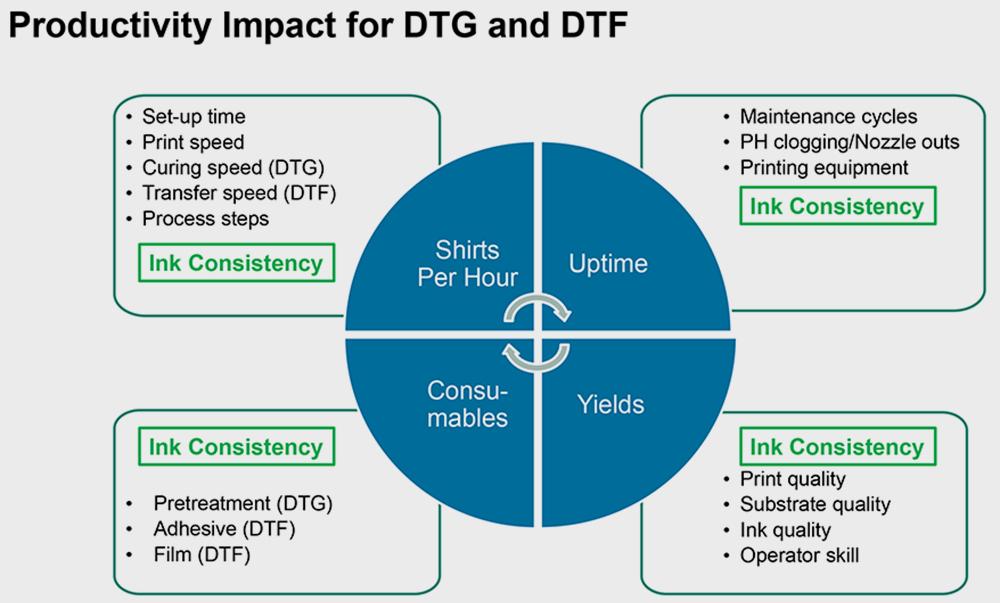
- DTF printing eliminates pre-treatment steps that slow DTG workflows. With the Huedrift Pro or Pro Max, you print transfers in batches, then press them onto garments as orders arrive. This separation of printing and application speeds up production dramatically during busy periods.
- DTG requires pre-treating each garment, waiting for it to dry, printing, then heat curing—every single item goes through this lengthy process. The Huedrift Printer approach lets you prepare transfers during slow periods and fulfill orders rapidly when customers need quick turnaround.
Cost Analysis: Investment and Operating Expenses
- The best DTF printer offers lower total cost of ownership than DTG systems. Initial investment for Huedrift Printer models ranges from entry-level Huedrift One for small businesses to the Pro Max for high-volume production. All models include flexible financing options, making them accessible regardless of budget.
- Operating costs favor DTF significantly. No pre-treatment chemicals needed, less ink waste, and fewer maintenance issues reduce ongoing expenses. DTG pre-treatment solutions, specialized inks, and frequent printhead replacements create higher operating costs. Businesses report thirty to fifty percent lower cost-per-print using Huedrift Printer models versus comparable DTG equipment.
Ease of Use and Learning Curve
- Huedrift Printer models prioritize user-friendly operation. The Huedrift One features simple controls perfect for beginners, while the Pro and Pro Max add advanced features without complexity. All models include free video tutorials and lifetime remote support, ensuring you never struggle alone.
- DTG printers demand extensive training for pre-treatment mixing, printhead maintenance, and color calibration. New operators often waste significant time and materials learning proper techniques. The straightforward DTF process—print, powder, cure, press—reduces training time and operational errors.
Business Scalability: Growing Your Operation
- Starting with the Huedrift One allows small businesses and hobbyists to enter custom printing affordably. As orders increase, upgrading to the Huedrift Pro provides faster production and wider print widths. Eventually, the Pro Max handles enterprise-level volume with professional-grade components and built-in curing systems.
- This scalable range means your equipment investment grows with your business. DTG technology doesn’t offer this flexibility—you either start expensive or struggle with production limitations as you grow.
Why Huedrift Represents the Best DTF Printer Choice
The Huedrift Printer lineup balances quality, affordability, and support better than competitors. Every model delivers vibrant colors, reliable adhesion, and consistent results across fabric types.
- The compact Huedrift One fits home studios, while the Pro Max powers commercial production facilities.
- Key features across the range include twelve-month warranty coverage, user-friendly controls, and compatibility with sixteen-plus fabric types.
- The advanced ink system in Pro and Pro Max models ensures exceptional durability and vibrancy.
- Enhanced software compatibility streamlines workflow management, letting you handle multiple orders efficiently.
- Straightforward maintenance minimizes downtime, keeping your business productive during peak seasons.
When to Choose DTF Over DTG
- Select the best DTF printer when you need fabric versatility for diverse product offerings.
- Choose DTF if you want lower maintenance requirements and faster production without pre-treatment hassles.
- DTF excels for printing on dark fabrics, synthetic materials, and accessories beyond basic t-shirts.
- Budget-conscious startups benefit from DTF’s lower operating costs and accessible entry prices. Huedrift Printer financing options make professional equipment attainable immediately rather than waiting to save larger amounts for DTG systems.
Making Your Decision
- Assess your business needs honestly. Most custom printing businesses require fabric versatility, reasonable operating costs, and scalable production capacity—all strengths of the best DTF printer technology.
- The Huedrift Printer range addresses every business stage from startup through enterprise growth.
- Calculate your expected production volume, budget constraints, and product variety goals. In nearly every scenario, DTF technology using Huedrift Printer equipment provides superior return on investment compared to DTG alternatives.
Conclusion: DTF Technology Leads the Future
The best DTF printer investment delivers versatility, efficiency, and profitability that DTG cannot match. Huedrift Printer models offer proven reliability across all business scales, supported by comprehensive training and lifetime assistance.
Whether choosing the beginner-friendly Huedrift One, the production-focused Pro, or the high-capacity Pro Max, you gain competitive advantages that drive business growth. Choose your Huedrift Printer model today and join successful businesses leveraging superior DTF technology.