
The custom apparel and print-on-demand market has developed in recent years and is growing exponentially. Business individuals and small firms are always in search of methods of printing or making quality full-colour print on various garments. Two of the most used printing technologies that are available include Direct-to-Film (DTF) and sublimation printing. Which is right in your business though?
It may be very important to have a clear picture of the distinction between these two printing technologies when one is just entering the world of owning a custom apparel business or trying to increase his/her supply to satisfy the existing demand. This paper will discuss the various attributes of DTF and sublimation, their pros and cons, and demonstrate why HueDrift DTF printers are superior among most small enterprises, designers, and print-on-demand transactions.
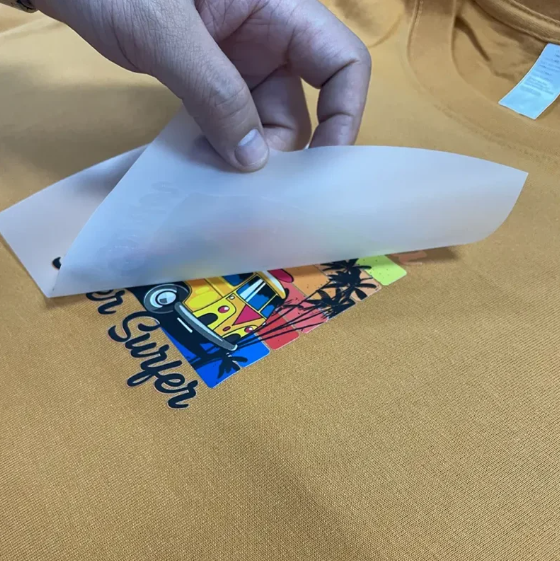
Comparison of DTF and Sublimation? Why?
One of the main challenges that such companies as small-scale and custom printing businesses have to deal with is the choice of a printing technology. The decision impacts such aspects as the variety of materials you may work with, the quality of prints, as well as the effectiveness with which you may expand the production.
Although sublimation is superior in some aspects, it has its shortcomings which may not allow entrepreneurs to develop more products or use alternative materials. Conversely, the DTF printing, particularly HueDrift professional solutions, is flexible, reliable and produces high-quality output that can be used by small businesses and emerging brands.
The point of this comparison is easy: you need to know what is different between them so that you could make a wise decision and find out how DTF printers offered by HueDrift can be used by you.
Basics of printing technology: DTF vs Sublimation
DTF (Direct-to-Film)
The process of DTF printing is a multi-sample transfer:
- Transfer DTF inks on PET transfer film.
- Apply hot-melt adhesive powder on the wet ink.
- Allow the film to dry so as to fix the powder.
- Heat press onto fabric.
It is a very diverse workflow. DTF is also suitable to a variety of products because it can print on cotton, polyester, blends, and others. No matter the color of your garments, light, or dark, DTF has bright colors, detailed effects, and gradient ones. It is particularly helpful in small businesses that would like to sell an extensive range of products.
Sublimation Printing
Sublimation printing involves printing special sublimation inks and heat-transfer paper onto polyester fabrics or polymer-coated products, such as mugs or hard-surface products.
This is achieved by the process of heating the solid ink at high temperatures to produce gas that is then injected into the polyester fibers. This produces vivid, photographic designs by use of smooth gradients, smooth hand feel and great durability.
Sublimation can however only be applied to polyester or coated substrates. It cannot be applied to cotton or other natural fibers and this limits the number of products that you can make.
DTF vs Sublimation: Key Differences
Here’s a comparison of DTF and sublimation across important factors:
| Factor | DTF | Sublimation |
| Material Compatibility | Cotton, polyester, blends, even mixed fabrics | Only polyester or coated surfaces |
| Color / Design Complexity | Supports complex designs, multiple colors, gradients, and photo-quality images; works on light and dark fabrics | Excellent color transitions; ideal for photos/illustrations, but limited to polyester |
| Softness / Hand Feel | Design layer adds slight “film” texture | Ink penetrates fibers for a natural, soft feel |
| Durability / Washability | Proper operation with quality materials and heat press ensures long-lasting, washable prints | Very durable as ink becomes part of fibers |
| Flexibility / Applications | Works on multiple materials, supports mixed orders, small-batch custom orders, and on-demand production | Restricted to polyester products; limited product diversity |
| Startup Cost / Investment | DTF printer + PET film + adhesive powder + heat press; moderate cost | Sublimation printer + sublimation paper + heat press + polyester items; fewer material choices |
| Best Use Cases | T-shirts, hoodies, cotton & blended garments, tote bags, hats, multi-material small-batch or POD products | Sportswear, polyester clothing, coated mugs, and polyester-only products |
This table highlights the main advantages of DTF for businesses that need material versatility, flexibility, and scalability.
Why HueDrift DTF Printers Are the Best Choice
Based on the above comparison, HueDrift DTF printers offer clear advantages for many small businesses and POD operators:
Material Flexibility
You can print on cotton, blends, polyester, or even canvas and hats. You’re not restricted to polyester-only products, allowing for diverse offerings.
Support for Diverse Product Lines
HueDrift printers allow an expansive range of products: T-shirts and hoodies, tote bags, hats, and mixed-fabrics. This ensures that it is easy to add on to what you are offering without changing printing technologies.
Perfect for Small-Batch & On-Demand Orders
For new entrepreneurs or businesses with fluctuating orders, DTF allows small runs without sacrificing quality. You can produce one-off designs, limited editions, or custom orders efficiently.
Entry-Level Complete System
HueDrift machines, HueDrift One, HueDrift Pro, and HueDrift Pro Max are all included with all the required consumables, RIP software, and ready-to-print setup to start printing immediately.
Sophisticated Stability Characteristics
- Automated white ink circulation system eliminates clogging and ensures a constant quality of print.
- Cleaning system is automatic and saves time on maintenance.
- Feed mechanism of stable film provides a smooth printing process even on long printing runs or complicated designs.
Such characteristics are why HueDrift DTF printers can be trusted by a novice or a small studio that does not have any prior experience. The dilemma of Quality and Versatility.
Although sublimation offers a competitive edge in softness and hand feel, DTF is more flexible, can be used with multi-materials, and is more economical; hence suitable with businesses that have a wide product range and small-to-mid-volume production.
Which of the two is better, Sublimation or HueDrift DTF?
Sublimation is ideal if:
- All of your products are polyester.
- You give high value to very tender prints, wholesome photo designs, and best washable durability.
- You are ready to limit your product line to products made of polyester only.
HueDrift DTF is ideal if:
- You want to print on cotton, blends, polyester, canvas, or hats.
- You need flexibility for small-batch orders, POD, or multiple product types.
- You want a turnkey solution with printer, consumables, software, and support.
- You value stable, low-maintenance, high-efficiency printing for a growing business.
HueDrift DTF printers enable you to begin small and grow big, without compromising on flexibility and quality hence a smart investment towards any entrepreneur or small business.
Maximum Impact Writing Advice and Style
In the case of DTF vs Sublimation:
- Do not use technical details, but real business examples. As an example: “In case you are selling cotton T-shirts, tote bags, and hats, sublimation will not meet your needs, whereas HueDrift DTF can.
- Focus on flexibility and growth potential, which appeals to Shopify, Etsy, and small brand owners.
- Add practical technical information and do not situate beginners. Keep it clear and actionable.
- Talk about the money and efficiency, demonstrating how it is possible to produce small batches and on-demand with HueDrift printers.
- Extraordinarily indicate the strengths of sublimation, yet explicitly clarify its shortcomings.
Conclusion
To people who are entrepreneurs, designers and small businesses joining custom apparel or POD markets:
- The sublimation works well on polyester and would give soft hand feel, vibrant colors, and longevity, however, it is constrained by material type.
- The HueDrift DTF printers, featuring their automated white ink system, fixed material feeding, RIP and all-in-one package, are more flexible, more versatile with materials and offer more scalability.
In brief, HueDrift DTF printers are the most intelligent to use in the case of small-scale, multi-material, multi-style, and on-demand production. They provide you with the means of running a professional, flexible and expansion ready printing business.