
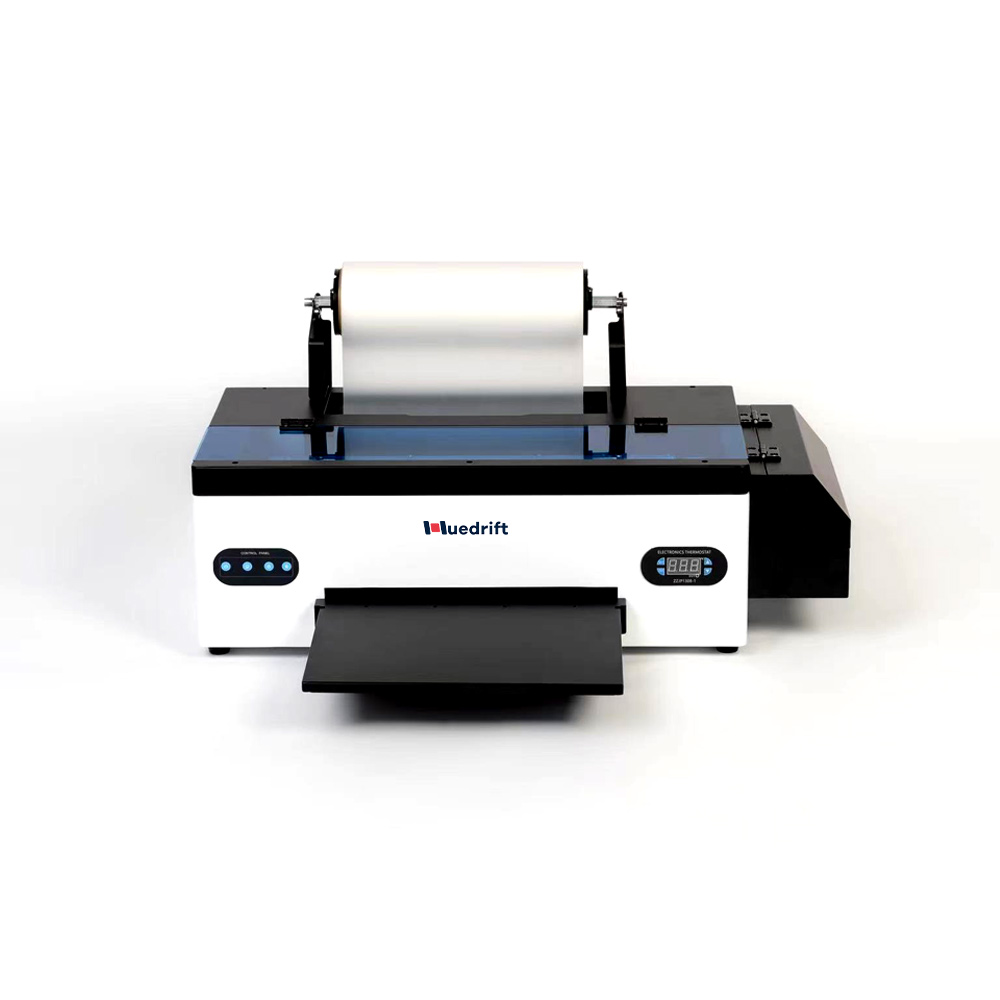
Direct-to-Film (DTF) printing is a fast-growing heat-transfer technology that gives you vivid, durable prints across many materials. A DTF printer prints your design directly onto a special transfer film, applies an adhesive powder, cures the powder, then uses a heat press to transfer the image onto the final substrate. The result: vibrant colors, fine details, and compatibility with cotton, polyester, blends and even some non-textile surfaces.
DTF Printers — Core Components
A modern DTF system includes:
- Printhead — the heart of the printer. Examples commonly used in the market include L1390 / L1800-style heads.
- Ink supply system — specially formulated DTF inks (including white ink). White ink is critical for dark substrates because it provides an opaque base layer.
- Transfer film — PET-based films designed to receive the ink and hold adhesive powder.
- Adhesive (hot-melt) powder — sprinkled over the wet print; it bonds to the ink and activates during heat pressing.
- Drying / curing station — dries the wet ink and fixes the adhesive powder before transfer.
- Heat press — applies pressure and heat to complete the transfer.
Key difference from traditional heat transfer: DTF prints directly onto a transfer film and uses adhesive powder, eliminating the need for pre-made heat transfer papers or vinyl.
How Does DTF Printing Work? The Step-by-Step Process
- Prepare the artwork in RIP or graphics software.
- Print onto PET transfer film with DTF inks (including a white underbase).
- Apply adhesive powder while the ink is wet.
- Cure/dry the print so the powder solidifies.
- Heat press the film onto the garment or substrate.
- Peel the film (hot or cold, depending on material) and post-press for durability.
Advantages of DTF
- Works on cotton, polyester, blends, nylon, leather, and more.
- Produces vivid colors and fine details, even on dark fabrics.
- Cost-effective for small to medium runs and on-demand orders.
- Easier to learn compared to some pre-treatment-heavy methods.
- Excellent for multi-color or photographic designs.
Limitations & Caveats
- Prints may have a slight “film” feel; large full-coverage prints can reduce breathability.
- Not always ideal for very large, high-volume single designs.
- Durability depends on curing quality and consumables.
- White ink requires maintenance to prevent clogging.
DTF vs. DTG vs. Screen Printing
| Feature | DTF Printing | DTG Printing | Screen Printing |
|---|---|---|---|
| Fabric compatibility | Wide (many materials) | Best on cotton | Wide, setup-specific |
| Light / dark garments | Works well on both | Dark needs pre-treatment | Works on both |
| Hand feel | Slight film feel | Very soft | Varies |
| Setup cost | Medium | Medium–High | High |
| Small-batch production | Excellent | Good | Not economical |
| Best for | Multi-material customization | Complex prints on cotton | High-volume single designs |
Choosing the Right DTF Printer for Your Needs
Key factors when evaluating DTF equipment:
- Print width (A3, A2, or larger).
- Throughput to match daily order volume.
- Ink system and white ink circulation.
- Stable supply of quality films, inks, and powders.
- Workspace and ventilation needs.
- Budget and scalability.
- Technical support and training.
Common applications: on-demand apparel, sample runs, promotional products, sportswear, bags, and small custom orders.
Scenarios where DTF shines include print-on-demand sellers offering the same design across T-shirts, hoodies, and tote bags, or boutique brands producing colorful limited-run designs.
HueDrift Product Tiers — Match Your Stage
- Entry-Level Kits — compact, affordable, easy to set up, great for startups and hobbyists.
- Commercial Models — higher throughput and reliability for small to medium shops.
- Consumables & Support — dependable supplies of inks, films, and powders, plus documentation and training to ensure consistent results.
Call to Action
Ready to see DTF in action? Contact HueDrift for a live demo, request sample prints, or get a personalized quote based on your business needs.
FAQ
Q: Can DTF prints be washed?
Yes. With proper curing and quality consumables, DTF prints are durable and washable. Follow recommended care to extend their life.
Q: Is DTF better than DTG?
It depends. DTF is more versatile across materials and often more economical for small runs. DTG excels on cotton with a very soft hand feel.
Q: How do I reduce the “film” hand feel?
Optimize powder amount, curing settings, and post-pressing. Thinner powders and a finishing press can help soften the result.