
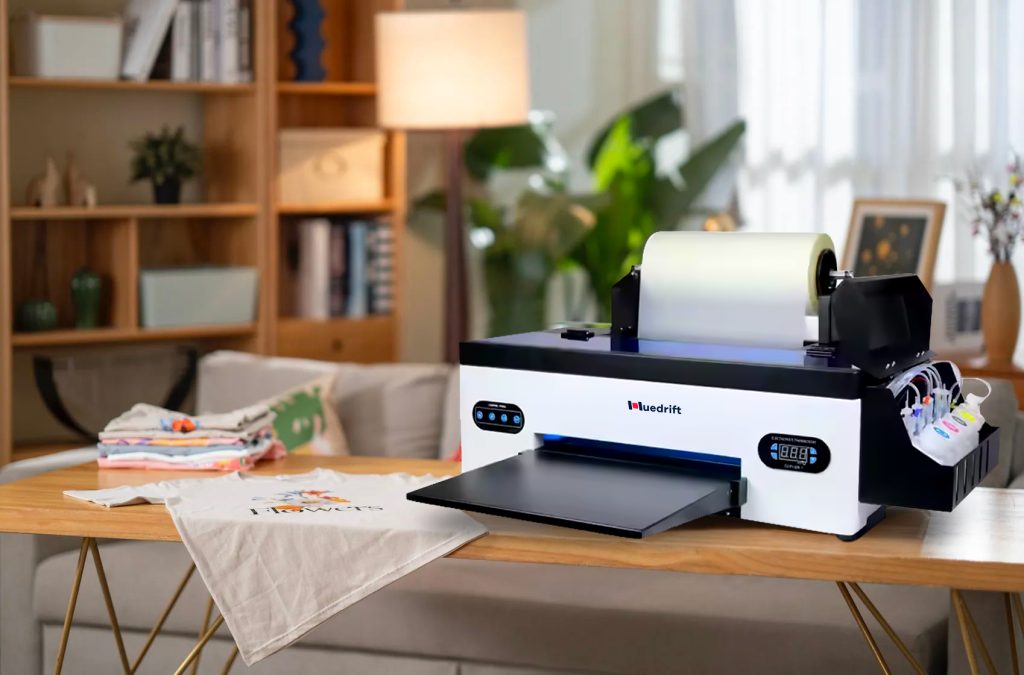
You’ve made the decision: Direct-to-Film (DTF) printing is the future of your custom apparel business. You’ve likely picked out a stellar A3 printer, like one of the HueDrift models. That’s the major investment!
However, unlike a desktop paper printer, a DTF machine is only one part of a complex, coordinated system. Without the right supporting gear and specialized consumables, you’ll struggle with inconsistency, failed transfers, and wasted film and ink.
This guide goes beyond the printer to give you a complete, categorized checklist of the hardware, supplies, and tools necessary for a professional DTF workflow. Our goal is simple: ensure your first print is a high-quality, profitable success.
Core Equipment: Hardware You Can’t Skip
Your DTF printer does the hard work of laying ink, but these pieces of essential hardware finalize the transfer and ensure reliability.
1. The Curing/Drying Solution
This step is critical: you must evenly melt the adhesive powder onto the wet ink. Inconsistent heat here leads to poor adhesion, cracking, or peeling.
- Curing Oven (Recommended): A small, dedicated oven is the gold standard for A3 printing. It provides consistent, contained heat at a precise temperature, melting the powder uniformly without the risk of dust contamination.
- Curing Tunnel (For Production): Integrated into a full, automated shaker system, tunnels offer continuous, high-speed curing for roll-fed film.
- Heat Press (Hobby/Temporary Cure): You can hover the heat press platen over the film to cure it, but this is slow, inconsistent, and highly prone to uneven melting. Use this only as a temporary measure.
2. The Heat Press Machine
This machine applies the final, controlled heat and pressure that bonds the cured transfer to the garment.
- Requirements: Choose a press that is at least the size of your largest print area (e.g., A3 or 15′′×15′′). It must maintain even heat and provide consistent, verifiable pressure across the entire platen for a successful bond.
- Recommended Types: Clamshell or Swing-Away models are the most popular for small studios.
3. Powder Shaker / Applicator (For Efficiency)
While beginners can manually sprinkle the DTF powder, a dedicated tool streamlines the messiest part of the process.
- Manual Applicator: A simple tray or hand-crank device helps evenly distribute the powder and collect the excess for reuse, reducing waste.
- Automatic Shaker: Essential for high volume; these machines automatically coat the print, shake off the excess, and often feed directly into a curing tunnel.
Consumables: Your Lifeblood (Supplies You’ll Go Through)
These are the specialized materials that make DTF possible. Using high-quality, matched consumables is the single best way to prevent head clogs and failed prints.
1. Specialized DTF Inks (CMYK+White)
- White Ink: This is the foundation of your print and requires a dedicated channel. Since white pigment is heavy, it settles quickly, making systems with white ink circulation (like the HueDrift Pro models) essential for reliability.
- Pigment-Based: DTF inks are specialized pigment inks formulated to bond with the adhesive powder and withstand high heat and washing. Never use standard office or sublimation ink.
2. PET Transfer Films
- Function: The heat-resistant plastic sheet that carries the print until transfer.
- Types:
- Hot Peel: Allows for immediate peeling after pressing; great for maximizing speed and throughput.
- Cold Peel: Requires the transfer to cool fully before peeling; often provides a smoother finish and stronger adhesion on tricky fabrics.
3. Hot-Melt Adhesive Powder
- Function: This TPU (Thermoplastic Polyurethane) powder is the “glue.” It melts in the oven and bonds the ink to the fabric fibers during the final press.
- Quality: Look for a fine-grade powder; its quality directly impacts the stretch, feel (hand), and wash durability of the final garment.
Auxiliary Tools & Workflow Optimization
These items are not strictly required to make a transfer, but they improve quality, safety, and operational efficiency—turning a hobby into a professional business.
| Category | Item | Function & Benefit |
| Workflow | RIP (Raster Image Processor) Software | Non-Negotiable: Controls the white underbase, manages color profiles (ICC profiles), and efficiently nests designs to save film. |
| Safety | Ventilation / Fume Extractor | Crucial: DTF powders and inks release fumes when heated. Proper air filtration and ventilation protect your health. |
| Calibration | Infrared Thermometer | Verifies the actual temperature of the heat press platen and curing oven, ensuring accuracy far beyond the machine’s internal display. |
| Pressing | Press Pillows & Sheets | Pillows ensure even pressure around seams/collars; Teflon or Silicone Sheets protect the press platen and finish the transfer. |
| Cleanliness | Lint Rollers & Anti-Static Brush | Removes microfibers and dust from garments/film before pressing, preventing defects in the final transfer. |
| Storage | Sealed Storage Containers | Keeps your DTF film and powder dry and safe from moisture, which causes adhesion problems. |
Maintenance & Replacement Parts You’ll Want From Day 1
Downtime is a death sentence for a small business. Having a small stock of maintenance items drastically reduces costly delays.
- Daily Care: DTF Cleaning Solution (specialized for pigment ink), lint-free Swabs, and Syringes for flushing print heads.
- Printer Parts: Spare Dampers, Capping Stations, and Wiper Blades. These parts wear out and are cheap insurance against days of lost production.
- Proactive Spares: Spare Fuses and basic Print Head Cleaning Kits.
Starter Kit Variants: How Much Gear to Buy Initially
HueDrift offers tiered kits to match your immediate needs, allowing you to scale without wasteful overspending.
| Kit Tier | Ideal User | Key Hardware Included | Focus |
| Basic Kit | Hobbyist / Entry Level | Printer + Heat Press + Core Consumables | Low initial cost; manual powdering/curing. |
| Pro Kit | Serious Startup Shop | Printer + Press + Dedicated Curing Oven + Full Consumables | Improved consistency and better throughput (Our best seller). |
| Production Kit | Scale-Ready Setup | Pro Printer + Oven + Shaker/Tunnel Option + Full Spares | Optimized for high volume, speed, and automation. |
Setup Sequence & Best Practices: From Unboxing to First Print
Follow this sequence to minimize errors and maximize efficiency:
- Workspace Setup: Designate clean, separate zones for printing, powdering, and pressing. Ensure ventilation is active.
- Printer Calibration: Unbox the HueDrift printer, fill the tanks with DTF Ink, and prime the lines.
- Software Installation: Install and configure the RIP Software (use the included HueDrift ICC color profiles).
- Hardware Staging: Set up the heat press and curing oven/shaker. Verify temperatures with an external thermometer.
- Test Run: Conduct a first “end-to-end” proof: Print → Powder → Cure → Transfer.
- QC Check: Always perform a wash test and rub test on your first sample before committing to a production run.
Common Pitfalls & How the Right Gear Saves You
| Pitfall | Cause | Solution Provided by Correct Equipment |
| Cracking/Fading | Poor powder melting or low-quality ink. | Curing Oven for consistent heat; HueDrift Inks for maximum durability. |
| Uneven Peeling | Inconsistent heat or pressure during transfer. | Calibrated Heat Press with even platen temperature. |
| White Ink Clogging | White ink settling when printer is idle. | HueDrift Pro/Pro Max models with White Ink Circulation. |
| Dust/Fibers in Print | Static or dirty workspace. | Anti-Static Brush and lint roller used before printing and pressing. |
Recommended HueDrift Products & Bundles
Choosing a complete ecosystem ensures all components—printer, ink, film, and software—work perfectly together, which is the cornerstone of reliability in DTF.
- Baseline Starter Kits: Get set up fast with a matched HueDrift printer and heat press bundle.
- Consumable Bundles: Stock up on specialized HueDrift film, powder, and DTF ink designed to optimize performance with our printheads.
- Accessories: Explore HueDrift’s curing ovens and maintenance kits to upgrade your Pro Kit setup.
Ready to build your complete studio? Shop our full line of DTF Starter Kits and essential accessories today!
FAQ
Q: Do I need a curing tunnel or will a small oven suffice? A: For most small studios or A3-sized printing, a dedicated small curing oven provides excellent, consistent results. Curing tunnels are only necessary when you scale up to high-volume, continuous roll-to-roll production.
Q: Can I start with generic consumables or do I need matched brand sets? A: We strongly recommend using HueDrift-matched consumables initially. Generic inks, powders, or films are the number one cause of printhead clogs, poor adhesion, and inconsistent color results. The minimal cost savings aren’t worth the risk of replacing a printhead.
Q: How critical is pressure uniformity in the press platen? A: It is extremely critical. Uneven pressure is a hidden killer of DTF transfers, leading to inconsistent wash durability and patchy adhesion. Invest in a quality press that can be easily and reliably adjusted.
Q: What spares should I always keep on hand? A: Always keep spare wipers, dampers, and cleaning solutions. These are the most common failure points that can halt production. Having them on hand means minutes of downtime instead of days waiting for shipping.