DTF vs.
Screen Printing
The secret to choosing isn't finding the "best" technology—it's about matching the gear to your specific business model. As a small studio, you don't need a factory-grade monster. You need a reliable partner.
Three Scenarios Where DTF Is Your Best Bet
DTF has become the go-to for newcomers because of its low barrier to entry and incredible flexibility.
The Zero-Experience Starter with a Tight Budget
DTF printers are surprisingly approachable. I recently helped a client, "Sarah" (a hobbyist turned pro), set up her first desktop unit. Within just 90 minutes, she went from unboxing the machine to heat-pressing a full-color photo onto a hoodie. You can't do that with screen printing without weeks of practice.
The King of "One-Offs" and Small Batches
If your brand thrives on custom TikTok requests or local club merch where orders are usually under 20 pieces, DTF is a lifesaver. There is no Minimum Order Quantity (MOQ). You can print a single shirt or a dozen different designs in one afternoon without ever touching a chemical wash.
The "Spare Bedroom" Studio
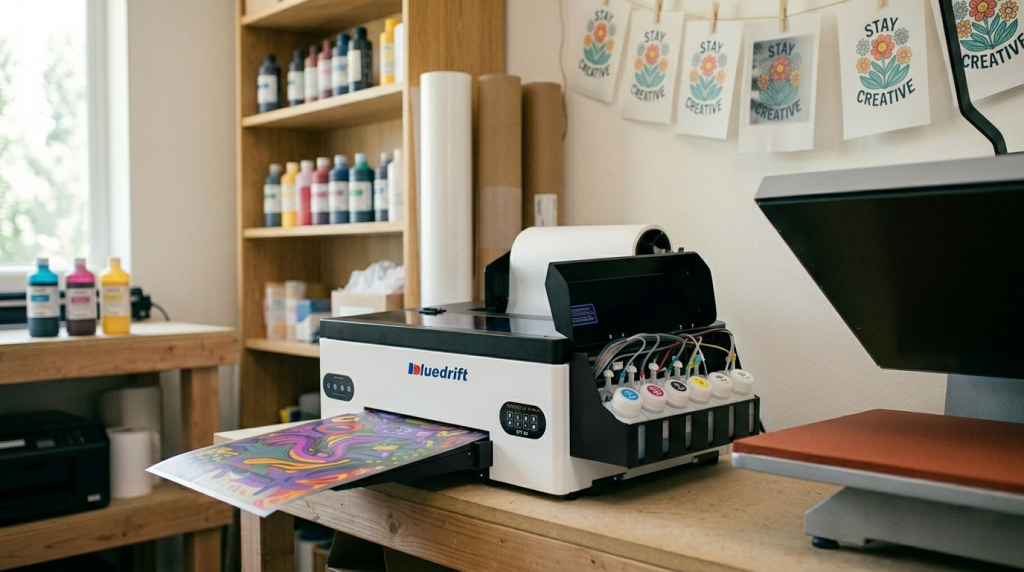
If space is at a premium, DTF wins. Most entry-level setups fit on a sturdy desk and don't require a darkroom or a washout booth.
When placing your printer, ensure you have at least 20 inches (50cm) of flat clearance in front of the output tray. This prevents the "wet" film from curling downward too sharply, which can cause the film to strike the printhead—a common mistake that leads to messy ink smears and expensive head cleaning.
Two Scenarios Where Screen Printing Still Reigns
Despite the DTF hype, traditional screen printing is still a powerhouse under the right conditions.
Long-Term Bulk Orders with Fixed Logos
If you score a contract for 500 "Staff" shirts for a local event, screen printing is your profit machine. Once the screen is "burned" (prepared), your cost per print drops to pennies, and the speed is unmatched by any digital printer.
Vibrant Solid Colors and Large "Blocky" Graphics
Screen printing excels at laying down thick, opaque ink. We ran a side-by-side test on black heavy-weight cotton tees: for a high-contrast bright white logo, the screen-printed version felt more integrated into the fabric and offered superior breathability compared to the "plastic-like" film layer of DTF, which can feel a bit sweaty on very large designs.
Three Critical Mistakes Novices Make
I've seen these three errors derail more studios than anything else. Take note.
Buying the Cheapest Printer and Ignoring "Hidden" Costs
That $800 converted home printer looks like a steal until you realize it doesn't have a white ink circulation system. The failure is predictable: leave the printer off for two days, the heavy white pigment settles in the lines, and by Monday morning, your printhead is permanently clogged. Investing a bit more in a unit with an active "White Ink Stirring" function saves you hundreds in replacement parts.
Choosing the Wrong Tech for Your Order Flow
If you choose screen printing but your customers only want 5 shirts at a time, you'll spend more time cleaning screens than actually making money. You'll lose customers to the "long lead time" required for setup.
Ignoring Fabric Stretch and Compatibility
DTF is versatile, but it's not magic. If you are printing on highly elastic Spandex or ribbed tank tops, you must use "High-Stretch" TPU powder. The validation check: if you use standard powder on a stretch garment, the design will crack like a dry desert floor the first time the customer puts it on. Always do a "stretch test" before shipping a new fabric type.
Quick Comparison
DTF is the safer, more agile choice for today's small studio.
In the battle of DTF vs. Screen Printing, DTF is almost always the safer, more agile choice for a modern small studio starting today. It allows you to say "Yes" to every customer. Save the screen printing for when you're moving hundreds of the same design every week.