
If you are getting into the custom t-shirt printing business you have probably heard of both DTF and sublimation printing. Is the same ink usable for both methodologies? The short answer is no – sublimation and DTF inks are different and can’t be substituted. You need to know these differences before buying any machines, because if you buy the wrong technology it can limit what you can produce and waste your money.
Quick Answer: DTF Ink vs Sublimation Ink
| Feature | DTF Ink | Sublimation Ink |
| Ink Type | Pigment-based + adhesive powder | Dye-based |
| Fabric Compatibility | Almost all fabrics | Polyester & coated materials only |
| Dark Fabrics | ✅ Works perfectly | ❌ Not suitable |
| Durability | Excellent | Very durable |
| Print Feel | Slight texture | No texture (part of fabric) |
What is DTF Ink?
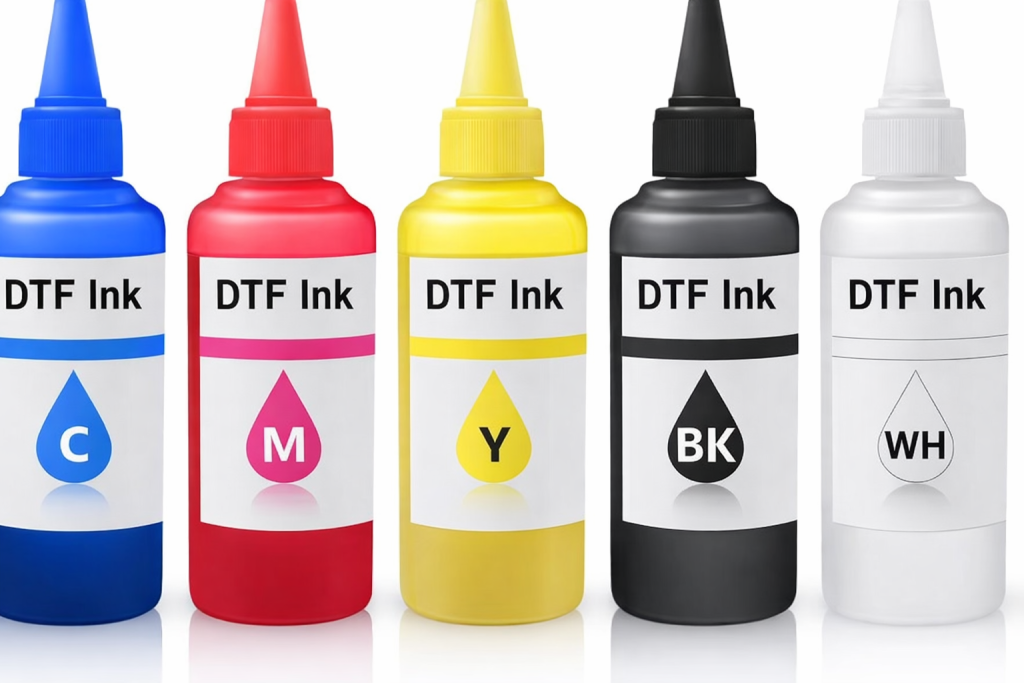
DTF (Direct-to-Film) ink is a a unique pigment ink that is formulated specifically for use with an adhesive based DTF powder. There are four main stages in the printing process: printing the design onto PET film, dusting it with adhesive powder over the wet ink, heating the transfer to cure it, and heat pressing it onto the clothing.
Its greatest benefit is that DTF ink has so many applications. It is suitable for use on cotton, polyester, blends, nylon and even difficult materials such as leather. This allows those companies that need to print on a number of different fabric types, to do so without having to invest in different machines. DTF ink is great for dark garment also and the colors are bold and have great opacity.
Contemporary DTF printers such as the Huedrift series are developed to utilize DTF inks with maximum color fidelity, high adhesion and repeatable results on an array of fabric options and materials.
What is Sublimation Ink?
Dye sublimation ink works on a completely different mechanism. It’s a dye-based ink that goes from solid to gas when heated without ever passing through the liquid phase. In this way the ink molecules enter polyester fibers and solidify within the fabric.
The downside to all this: sublimation is only viable on polyester (or specially coated materials). The ink needs polymer molecules to bond to which natural fibres such as cotton do not have. Furthermore sublimation cannot print on dark fabrics since the dye is absorbed into the fabric rather than sitting on top – white colours would be invisible on a dark background.
For the most part, yes, sublimation works on white or light colored polyester, what you’ve said is correct, applied right sublimation on white or light colored polyester will produce beautiful, phot-quality, zero texture prints with exceptional wash durability.
5 Critical Differences You Must Know
Chemical Composition
DTF is a pigment ink which sits on the surface of the fabric and is sealed with an heat-activited adhesive powder. Sublimation uses dye-based ink that chemically bonds with the polyester molecules. This essential distinction means they need entirely different hardware and one can not stand in for the other.
Fabric Compatibility
DTF wins hands-down for versatility. DTF does everything, whether you’re printing on 100% cotton t shirts, polyester sportswear, or cotton-poly blends. Sublimation limits you to polyester fabrics or products with a polyester coating, which greatly restricts your line of goods.
Color Vibrancy on Different Fabrics
On white polyester, sublimation yields unparalleled color brilliance with a soft, breathable feel. DTF offers vivid colors on all kinds of textiles including dark ones which sublimation is not applicable on. If your business revolves around dark hoodies or black t-shirts, DTF is your only real option.
Equipment Requirements
DTF printing requires a DTF printer (with proper ink delivery systems), a curing oven or heat press with curing capability, and adhesive powder application equipment. The Huedrift DTF printer series simplifies this process with integrated systems designed specifically for DTF workflow.
Sublimation needs a sublimation printer, sublimation paper, and a heat press. While the setup seems simpler, remember you’re locked into polyester-only production.
Production Flexibility
DTF excels at small-batch custom orders with complex, full-color designs. You can easily switch between different fabric types without changing your setup. Sublimation works best for larger runs of polyester products, particularly when producing items like sportswear, flags, or photo products.
Can You Use Sublimation Ink in a DTF Printer?
Absolutely not. Attempting this will damage your printer and produce failed prints. Here’s why:
- Sublimation ink lacks the viscosity and formulation required for DTF film printing
- It won’t bond with adhesive powder used in DTF transfers
- The chemical composition can clog or permanently damage DTF print heads
- The transfer will fail completely during heat pressing
Each technology requires purpose-built equipment and matching consumables.
Which Technology is Right for Your Business?
Choose DTF if you need:
- Versatility across multiple fabric types
- Ability to print on dark garments
- Small to medium batch production
- Complex designs with gradients and fine details
- Quick turnaround for custom orders
Choose Sublimation if you:
- Primarily produce polyester products
- Focus on sportswear or activewear
- Need photo-quality reproduction
- Produce large quantities of similar designs
- Want prints with absolutely no texture
Getting Started with DTF Printing
For businesses seeking maximum flexibility, DTF technology offers the best return on investment. The Huedrift DTF printer collection provides solutions for every business size—from the compact Huedrift One for beginners to the high-capacity Huedrift Pro Max for established operations.
These printers come with comprehensive support, including video tutorials, remote assistance, and a one-year warranty. With flexible financing options available, starting your DTF printing business has never been more accessible.
Conclusion
DTF ink is formulated for the DTF printing process and sublimation ink for dye sublimation printing, and they use different printing technologies and are not compatible. DTF is almost too good to be true in its versatility on fabric types and colors, so it works well for a wide range of custom print businesses. Sublimation works great on polyester, but with very limited options in material.
When you know these differences, you’ll be better positioned to purchase a system that is right for your business. Ready to explore DTF printing? Experience how Huedrift Professional DTF Printer can revolutionize your apparel printing business with dependable productivity, dazzling outputs, and unrivaled fabric adaptability.