
Best DTF printers for small businesses in 2025
Choosing the right DTF printer means striking a balance between quality, cost, and production needs. Some printers can handle larger print sizes, some save ink, and others are easier to maintain.
Choose a model that matches your business size and the products you want to offer . This way, you can avoid bottlenecks and maintain stable production .
Best DTF printers
If you prioritize versatility and consistent print quality, consider a printer with wide-format printing capabilities and low operating costs. For example, the Epson EcoTank Photo ET-8550 is popular for its large print area, high color accuracy, and low ink consumption.

This printer is compatible with a variety of fabrics, making it ideal for garment or merchandise production. You’ll also typically enjoy a longer warranty and easier maintenance.
It’s reassuring that the printhead is easily supported and that customer support is truly effective. Investing in such a chassis can avoid the hassle of frequent repairs or missed delivery deadlines.
Affordable DTF printer options
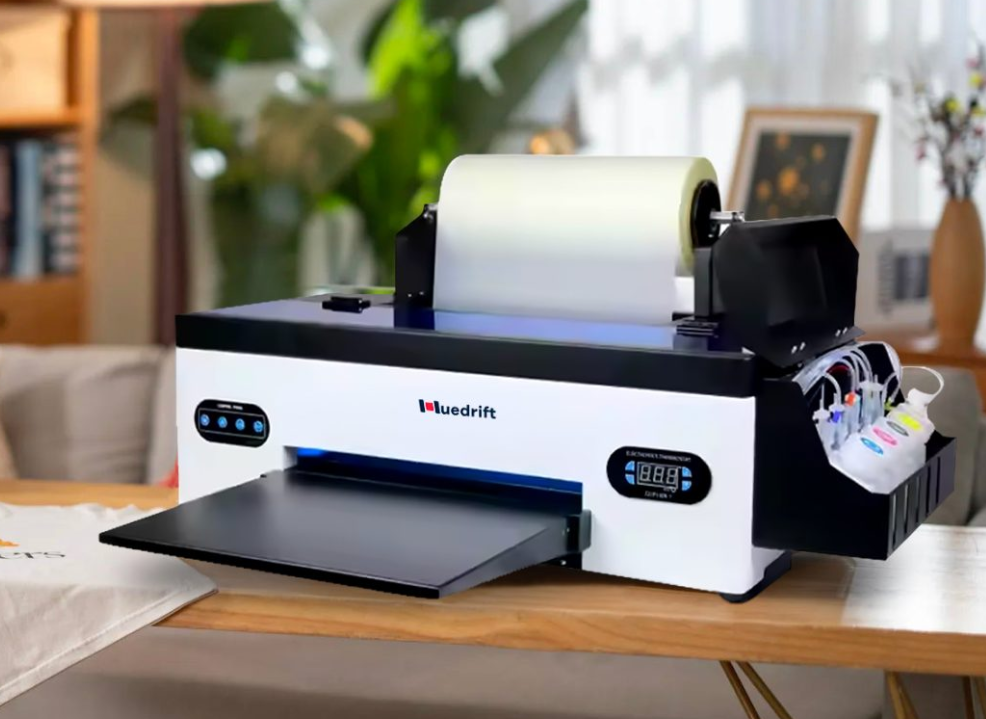
Just starting out with printers or don’t want to spend too much money? Then choose a refillable ink cartridge and set up a simple printer. The Huedrift One is a reliable and affordable option, perfect for beginners .

It offers decent print quality without overworking the printer, making it ideal for small-batch printing or testing new ideas. Lower-priced printers typically print smaller areas at slower speeds, but are sufficient for basic T-shirts and small items.
Make sure to carefully check that your printer is compatible with the extreme film you want to use. Paying for unplanned upgrades can be a hassle.
Precision printers suitable for mass production
If your business is growing rapidly, you’ll need a fast and durable printer. High-capacity DTF printers print faster, support larger media sizes, and are helpful for handling large orders.
If you have a limited budget, a high-capacity ink supply system is essential. A professional-grade chassis offers a longer warranty and more comprehensive tools, so you won’t have to worry about maintenance.
If you print large volumes of products daily, or need to print in professional mode on thicker configurations, these printers are worthwhile. But frankly, you should only consider models costing over $500 if your workload truly demands it.
Key performance parameters when choosing a DTF printer
Are you choosing a DTF printer for your business ? You need to consider the following aspects: printing speed, color accuracy (especially important for T-shirts), and the durability of the prints after washing.
Print quality and resolution
Print quality is paramount. Higher resolution—such as 1200 dpi or higher—means sharper details and more angular lines.
This is crucial if you’re printing fine images or photos. Choose a printer that can handle fine details and smooth gradients, avoiding unsightly streaks or fading.
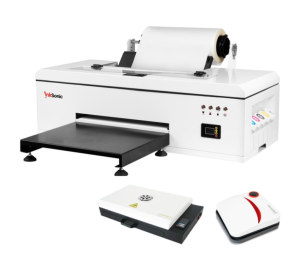
A reliable printhead and a stable ink supply help avoid frustrating speed and waste. If you need to print large-format documents, choose a model that supports A3. The R1390 DTF printer is a great example—it prints quickly and produces clear images, helping you deliver more products.
Printing speed and throughput
Speed directly impacts profits. Faster printers can complete more orders, but their upfront costs are usually higher.
Before you decide to buy a new printer, consider how many sheets of paper you typically print per week. Print volume depends on whether the printer can run continuously without overheating or requiring constant maintenance.
Drying time and powder coating volume will also increase operating time. Some printers reduce printing speed to ensure optimal print quality, so you’ll need to find a balance that suits your needs. If you anticipate future business growth, choose a machine that can handle larger future orders.
Color accuracy and white ink performance
Color accuracy is paramount, especially in printing. You need to ensure that the printed product perfectly matches the design.
A printer with a wide color gamut can make your work stand out more. White ink is equally important—it acts as a base color on the Abyss T-shirt, so it must be concentrated and evenly applied.
White ink clogging is very troublesome, so choose a printer known for its white ink stability. A uniform white ink layer ensures your prints will look good on any colored fabric.
Wash fastness and application
Your printed designs must withstand washing—nobody likes designs that fade or crack. Wash fastness depends on the drawing power of the ink and powder, as well as the curing method of the print.
Tested and enhanced, these printers and inks are designed to withstand varying cleaning agents and temperatures. Durable prints mean customer satisfaction and reduce the need for refunds or rework.
To ensure your printed products last, you must maintain the nozzles and printheads regularly. This takes some effort, but when your products still look brand new after several shocks, you’ll feel it’s all worth it.
Direct film printing workflow for small businesses
The DTF printing process involves several key steps, each crucial for achieving clear and durable prints . You must understand how printing, powder coating, and hot pressing work together smoothly.
Properly handling face masks and exfoliating powder is crucial—improper handling can lead to quality problems .
DTF Printing Process Overview
First, use a DTF printer to print your design onto a special film. This printer uses water-based ink that contains a white coating for deep-dye T-shirts.
After the printed material has dried slightly, sprinkle some powdered binder onto the wet ink . Then, gently heat the film to allow the powder to harden and dry with the ink.
Finally, a heat press is used to print the pattern onto the garment. This produces a richly detailed and vibrant design, and the pattern must be completely clear.
Understanding hot pressing and curing
Heat pressing is key to achieving this amazing effect. You need to use heat and pressure to press the printed film onto the T-shirt—both must be just right.
Most people use temperatures between 160°C and 180°C (320°F to 356°F) and apply sufficient pressure to generate bubbles. Timing typically takes 15 to 30 seconds.
After heat pressing, allow the printed parts to cool slightly to reach peak performance. Skipping this step may result in cracking or peeling of the printed parts later.
The Importance of Powdered Adhesives and Transfer Films
In direct printing processes, preservative powder is very important. You need to apply it over the dried ink to help the ink adhere to the fabric.
Not all powders are suitable for all printers or fabrics, so be sure to check compatibility. The coating is also important—it must be tough enough to withstand printing, powdering, and heat pressing.
The quality of the film affects the smoothness of the print and the ease of peeling after printing. A suitable combination of printing powder and film is crucial, especially when printing on cotton, polyester, or blended fabrics.
Material compatibility and functionality
If you want to offer more products , choose a DTF printer that is compatible with multiple materials . Flexibility allows you to expand your custom apparel business.
Printing on different types of fabrics
Your printer should be able to handle cotton, polyester, and blended fabrics. Cotton fabrics are widely used in clothing and print well because they readily absorb ink and powder.
Polyester and its blends require pure white ink to achieve vibrant colors, especially on dark fabrics. Ensure your printer can firmly adhere ink powder—this will affect print durability.
In addition, check that these films are compatible with your printer. Flexible and durable films make the transfer process easier and more reliable. A fully-featured printer means that the works you can create will be more limited.
Expand the range of garment production products
If your printer can handle a variety of fabrics, you can expand your business—for example, by customizing T-shirts , hoodies, bags, and even jackets. This flexibility can bring you more customers.
Consider how a printer can integrate into your daily workflow. Its fast curing and ease of maintenance can speed up processing when orders are piling up.
Stable white inks and precise color reproduction ensure customer satisfaction. Printing on a wider range of fabrics allows you to stand out in the highly competitive bespoke apparel market.
Operating costs and maintenance considerations
Understanding your total spending on a DTF printer—including upfront and long-term costs—can help you avoid unexpected expenses. You need to weigh costs such as initial price, ink usage, parts replacement, and routine maintenance to ensure your business runs smoothly.
Total cost of ownership of DTF printers
Don’t just look at the price tag. You also need to consider the ink, replacement parts, and all the extras that can ensure clear prints.
High-capacity refillable ink cans are generally cheaper than ink cartridges. High-capacity ink can reduce the cost per page printed.
Try to avoid printers that force you to buy expensive, proprietary consumables. Keep track of your ink usage and maintenance needs to better budget for your printer.
Routine maintenance and ink management
Regular maintenance ensures smooth printer operation. Clean the printhead and nozzles frequently to avoid clogging , especially if you don’t print every day.
Clean strictly according to the manufacturer’s cleaning plan and use compatible inks and films. This helps avoid damage and maintain vibrant colors.
Don’t just add ink—always monitor the ink level and replace the ink before it runs out or becomes contaminated. This way, you won’t encounter print damage or need for repairs.
Reliability of small business workflows
If your business relies on stable production, then you need a reliable printer. Frequent breakdowns or cumbersome maintenance can quickly erode your profits.
Choose a model that is easy to operate and maintain. The warranty covers key components, and the brand has a comprehensive after-sales service team, making the extra cost worthwhile.
When choosing a printer, look for models that allow users to replace the printhead and easily replace the filter. Avoid printers that require professional repair or complex setup for even minor issues.
A reliable printer allows you to focus on your creative process without having to constantly troubleshoot.
Comparison of mainstream DTF printer brands and models
When choosing a DTF printer , small businesses need to weigh trade-offs between print quality, cost, reliability, and maintenance. Some printers support a wider range of media types or have higher ink utilization, while others last longer or offer better after-sales support.
To be honest, there are many factors to consider, but understanding these differences can indeed help you accurately find the products that best suit your production needs.
The other party’s specific advantages
Not all DTF printers are created equal. Take the Epson L1800 DTF printer, for example —people like it because it can print headphone T-shirt designs, and the starter kit isn’t expensive.

It can handle different media thicknesses and maintain color accuracy, although it doesn’t win any race in terms of speed compared to more advanced options.
If you want a more powerful printer, a mid-range chassis like the Epson EcoTank ET-8550 allows you to print wider formats and save ink. This is certainly true for balancing print quality and operating costs.

Multi-ink systems can be confusing for beginners. They are not easy to maintain, especially when you first start using them.
Economy printers are convenient and portable, and come with refillable ink cartridges. The speed is a lifesaver for companies, but print size and format are limited.
If you want to reduce costs, look out for printers that only use special ink cartridges. Otherwise, they’ll only eat into your profits.
User experience and after-sales support
Extensive installation and excellent after-sales support can save you a lot of time. For example, Epson offers proactive customer service, and you can easily obtain the necessary spare parts, such as self-cleaning printheads.
This means you can avoid expensive repairs and ensure smooth production. User experience often depends on the simplicity of the printer software and drivers.
Some high-end cases come with voice-guided maintenance guides. In addition, there are active online communities where you can easily seek help when you encounter problems.
Some vendors even offer starter kits and trial media, so you don’t have to buy a bunch of extra stuff just to get started.
After-sales support is crucial if you want to make full use of your order film and ink immediately. Frankly, it’s always wise to check customer service response times before buying anything.
An example of a printer that meets these criteria is the Epson L1800 DTF shirt printer .
