
What Is DTF Powder?
Ink and film get most of the attention in DTF printing, but neither one actually sticks to fabric on its own. That job belongs to DTF powder — a fine white adhesive that turns a printed design into a permanent, washable transfer. This guide covers what it’s made of, how it actually works, and what goes wrong when it’s handled incorrectly.
What DTF Powder Is Made Of
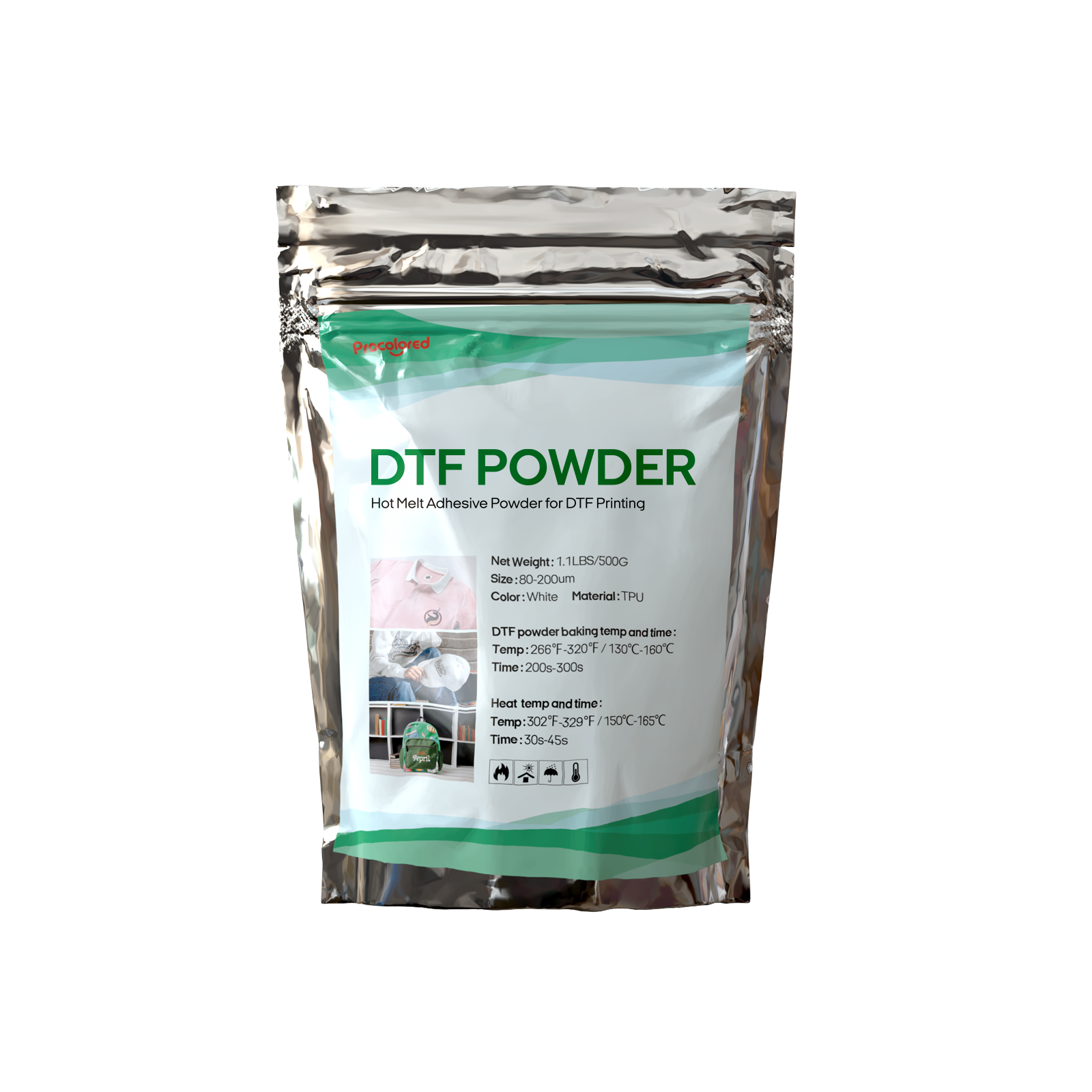
DTF powder — also called hot-melt adhesive powder or DTF transfer powder — is a thermoplastic granulate, most commonly TPU (thermoplastic polyurethane). At room temperature it’s a fine, dry powder, almost sand-like. Heat it past its melt point and it turns into a smooth, continuous adhesive film; let it cool, and that film hardens permanently.
That melt-and-reharden behavior is the entire mechanism DTF transfers rely on. Printed ink sits on top of PET film with nothing holding it there long-term. Powder applied to that wet ink, then melted during curing, becomes the actual bonding layer — the thing that lets a heat press fuse the design into the fabric fibers permanently, rather than leaving it as ink that could wash or rub off.
TPU-Based
High-purity thermoplastic polyurethane is the standard material — durable, stretch-resistant, and less prone to cracking than lower-grade alternatives.
Heat-Activated
Solid and stable at room temperature, melts around 110°C, re-hardens on cooling into a permanent bond.
Flexible When Cured
A properly cured layer flexes with the fabric instead of cracking, which is what lets prints survive stretching and repeated washing.
Weather & Wear Resistant
Cured powder holds up across a wide temperature range and resists moisture, abrasion, and mild chemical exposure over the life of the garment.
TPU isn’t the only polymer used to make hot-melt powder — polyester-based (PES) and polyamide (PA) versions exist too, aimed at more specialized cases like extra-rigid finishes or technical textiles with tricky bonding requirements. TPU remains the standard for a reason: it’s the most versatile option across fabric types, and it’s what nearly every DTF operation — HueDrift included — builds its supplies around. Unless you have a specific technical reason to reach for PES or PA, TPU is the right default.
Handle and store it properly: DTF powder is generally safe to work with, but fine airborne particles can irritate the lungs if inhaled in a poorly ventilated space — work with adequate airflow, and check the powder’s Material Safety Data Sheet (MSDS) for specific handling guidance. Store it in a cool, dry place away from direct sunlight to prevent clumping and preserve its melt performance.
How DTF Powder Actually Works
Powder sits in the middle of the DTF workflow — after printing, before curing — and timing matters more here than almost anywhere else in the process.
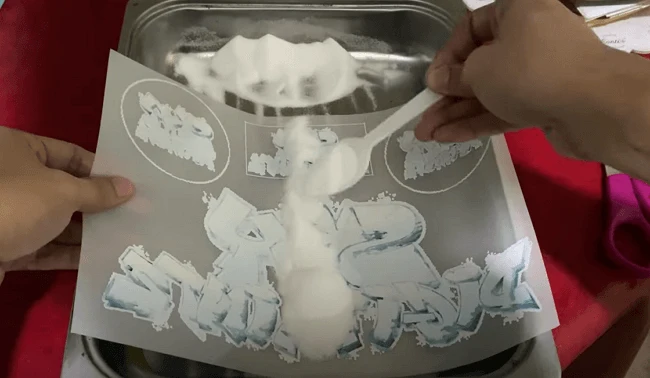
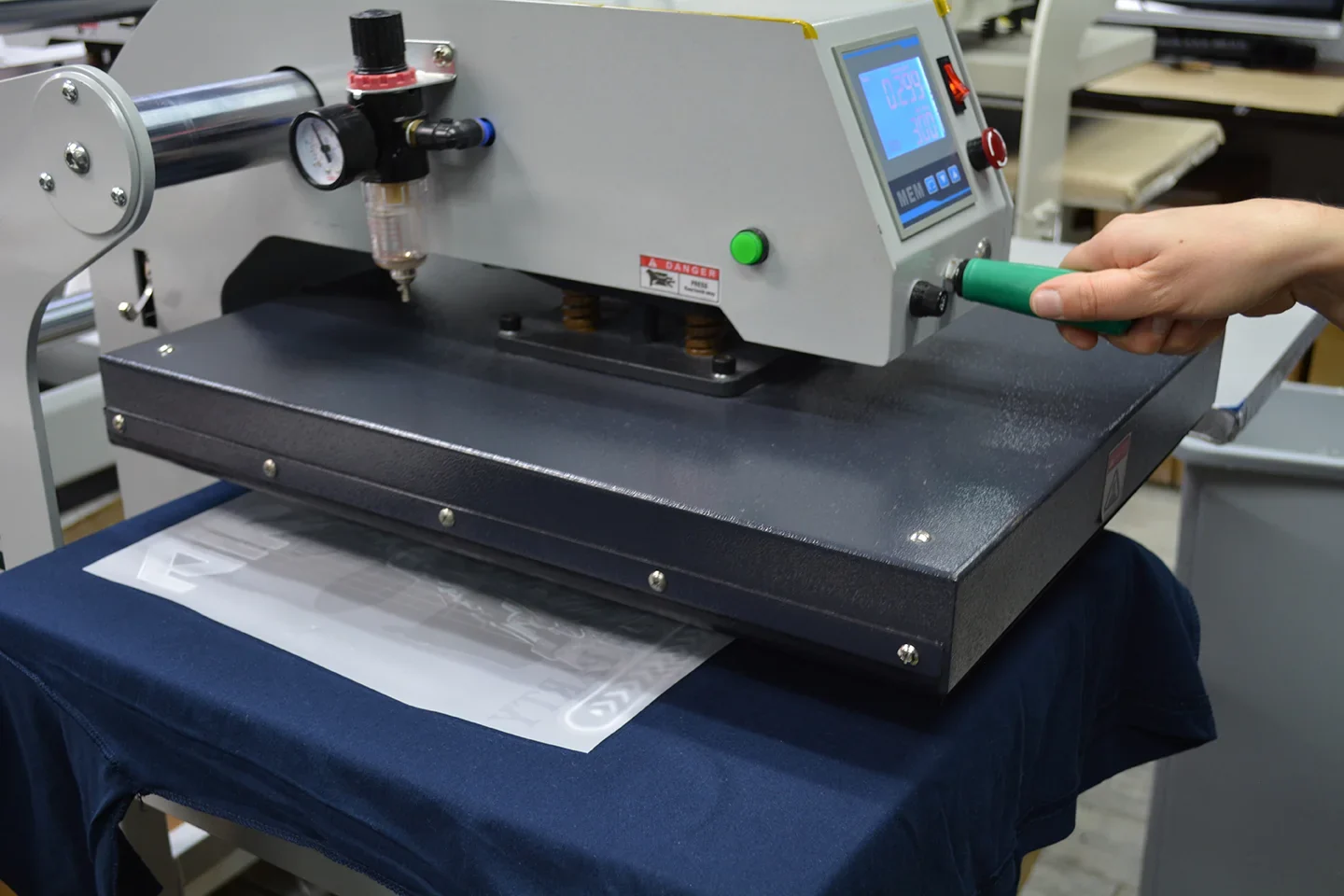
The rule that explains most powder problems: Powder only sticks to wet ink. Wait too long after printing and the ink starts to skin over — the powder won’t adhere properly, no matter how much you apply. Speed between print and powder matters more than almost any other variable in this process.
Why This Guide Focuses on White Powder
The market does offer a black hot-melt powder alongside white, marketed for niche use on all-dark, all-black designs. In practice, it’s a small slice of real-world DTF work.
White powder is the standard because it’s the versatile choice: it works underneath any design, on any fabric color, without tinting or discoloring the colors printed above it — especially important when it’s layered over a white ink underbase, which is already doing the work of blocking dark fabric color. That’s why HueDrift’s printer bundles and supplies are built entirely around high-purity white transfer film powder rather than stocking both colors. For the overwhelming majority of shirts, hoodies, and accessories you’ll print, white is the only powder you need to think about.

HueDrift Pro DTF Printer
Ships with 500g of high-purity white adhesive powder plus core supplies included, so you’re printing correctly-bonded transfers from the first roll of film.
View HueDrift Pro →Fine vs. Medium Powder Grain
Powder isn’t sold as one uniform grade — grain size is measured in microns, and it changes both the finished feel and the print detail you can reproduce.
| Grain Size | Typical Range | Best For |
|---|---|---|
| Fine | 80–160 microns | Detailed designs, softer hand feel |
| Medium | 100–200 microns | General-purpose everyday printing |
| Coarse | 200+ microns | Large designs, thicker adhesive layer for canvas or denim |
Finer powder gives you a softer hand feel on the finished garment and holds fine line detail more faithfully, since smaller granules pack more tightly around intricate edges. Medium grain is the more forgiving, general-purpose choice for everyday shirt printing where texture is less critical than consistent adhesion. Coarse grain builds a thicker adhesive layer, useful for bold designs on heavier fabrics like canvas or denim where a stronger bond matters more than fine detail. None of the three is objectively “better” — the right grain size depends on what you’re printing and how the final product needs to feel.
When Powder Goes Wrong
Nearly every powder-related print defect traces back to timing, quantity, or cure temperature — rarely the powder itself, unless it’s genuinely low quality.
- Letting ink dry before applying powder
- Applying more powder than needed “to be safe”
- Undercuring — powder stays tacky, not fully melted
- Using low-purity or recycled TPU powder
- Uneven, patchy powder application
- Apply powder within 30-90 seconds of printing
- Shake off all excess before curing
- Verify cure with an infrared thermometer, not the oven gauge
- Choose high-purity, consistent-color white powder
- Apply in a single, even, thorough pass
Color clarity is the simplest way to judge powder quality before you even use it: high-purity white powder looks bright and clean, while yellowish or gray-tinted powder usually signals recycled or blended material — often the same batch that ends up cracking, peeling, or leaving a hazy finish after a handful of washes.
Get the Full DTF Workflow Right
Powder is one piece of the process — see the complete step-by-step guide from design to finished garment.
Read the Full DTF GuideCurious about real running costs? Try the DTF Printer ROI Calculator.
DTF Powder Questions, Answered
A few more questions that come up once people start working with DTF powder directly.